Side-on visibility
Projecting and Hanging Signs for Streets, Walkways and Interiors
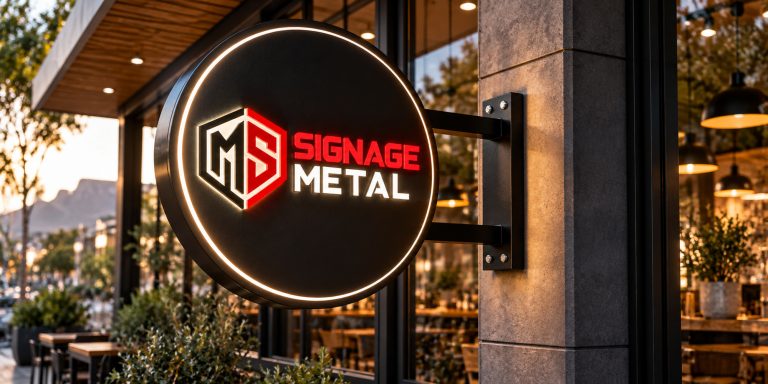
A flat fascia is hard to read until you are in front of it. Projecting signs stick out from the wall and hanging signs drop from a canopy or ceiling, so people approaching along a street, arcade or aisle see your business from the side.
Metal Signage designs and fabricates both types in metal, acrylic and composite, lit or unlit, and arranges installation by appointment.
- Seen side-on from afar
- Lit and unlit options
- Wall, canopy or ceiling fixed
- Premium or practical finishes
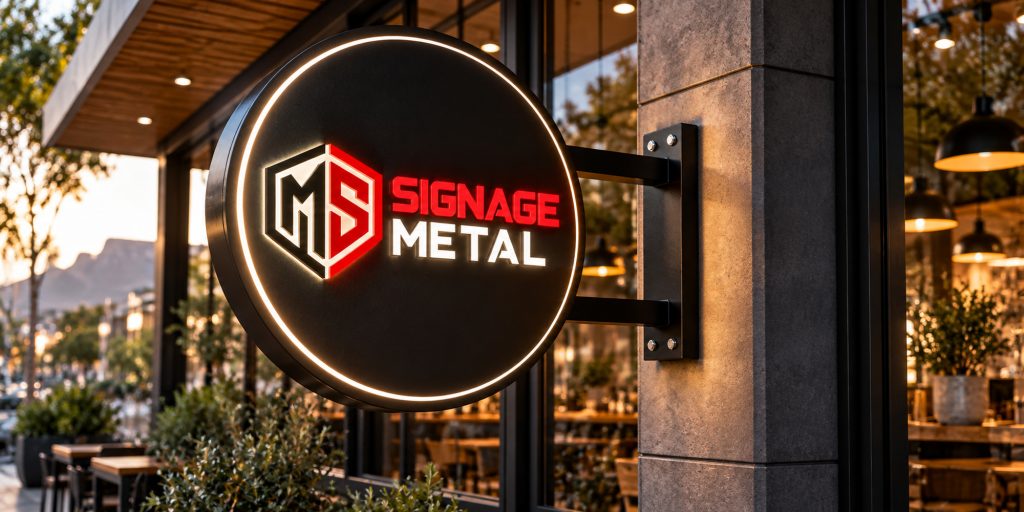
Where projecting and hanging signs work best
- Narrow street-front shops, cafes and salons in business and retail nodes
- Arcades, courtyards and walkways where people approach along the frontage
- Professional practices such as dentists, lawyers and clinics on office-lined streets
- Hospitality venues that want a classic hanging sign
- Inside stores, to mark departments from the entrance
- Under canopies and covered walkways, where wall signs are hidden
- Heritage and character areas where large fascia signs are discouraged
If you have a wide frontage seen mainly from the road, a shopfront sign or fascia may carry more weight. A projecting sign is usually the complement, not the replacement.
Design options
- Flat projecting panels: a flat board on brackets, printed or cut, double-sided.
- Shaped signs: laser-cut or fabricated shapes that echo a logo or trade.
- Hanging signs: panels on chains or rods under a canopy, balcony or ceiling.
- Lit blade signs: LED lightbox or edge-lit panels, covered further on illuminated blade signs.
- Hand-crafted brackets: decorative scrolled or minimal flat-bar brackets in steel or brass.
- Internal hanging signs: department signs suspended from the ceiling grid or soffit.
Think about both faces. A projecting sign has two sides, and the artwork should be readable from each approach direction.
Materials and finishes
Frames and brackets are normally steel or aluminium, powder-coated or painted for weather resistance. Panels can be aluminium composite, solid aluminium, stainless steel, brass or Corten for a premium look, or acrylic for lit faces. Graphics are printed, cut vinyl, applied letters or routed. Chains and fixings are chosen for the load and for how visible they are. Where signs are close to people, edges and corners are rounded and finished smooth.
Lighting options
A projecting sign is only useful after dark if it is lit or sits in good street lighting.
- Double-sided LED lightboxes give an even, bright face.
- Edge-lit acrylic gives a thin, modern look.
- Illuminated lettering inside a hanging frame can be halo-lit for a softer effect.
- External spotlights are an option but need aiming and glare control.
- Power access at the wall is checked at the survey; cable routing is planned so that it stays discreet.
How it compares with related options
- Choose a projecting sign when passers-by walk along the frontage and cannot see flat signs until they reach the shop.
- Choose a blade sign if you want a taller, vertical illuminated format; the focus there is lighting and fabrication.
- Choose a shopfront sign for the primary identity above the door.
- Choose a totem sign when the frontage is set back and a ground-standing vertical sign is needed.
- Choose a POS hanging sign inside the store, where scale and fixing method are lighter.
Technical considerations
- Viewing distance and size: as a rough guide, many designers allow around 25 mm of letter height per 10 m of viewing distance. Projecting signs are usually read from a short approach distance, but their size determines how soon you notice them. We confirm on site.
- Projection and clearance: signs over pavements need enough clearance for people and vehicles. The municipality may set limits on projection and height.
- Structure and fixing: brackets must be fixed into suitable structure, not just cladding, and the wall must carry the load including wind. We check this in the survey.
- Wind: double-sided panels act like sails. Bracket and panel design takes wind into account.
- Electrical access: lit signs need a safe power feed, which is checked at survey.
- Approvals: landlord, body corporate or municipal approval may be needed, especially over public pavements. These are checked during the survey and design stage and cannot be promised in advance.
What affects the price
- Size, thickness and materials
- Single or double sided
- Lit or unlit, and the type of lighting
- Bracket design: simple or decorative
- Fixing conditions: brick, concrete, steel or cladding
- Installation height and access equipment
- Approvals and drawings
- Number of signs and whether they repeat
Care and maintenance
Clean panels and brackets with mild soap and water. Check bolts, chains and brackets for movement, corrosion and wind damage on a regular schedule. Touch up chips in the paint before rust can start. Lit signs should be checked for dark modules and moisture. Hung signs in interior spaces should be inspected whenever ceilings are worked on. Our maintenance service covers inspections and minor repairs.
Projecting signs across Gauteng
Options & specifications
| Types | Projecting, hanging, shaped, double-sided |
|---|---|
| Frames | Powder-coated steel or aluminium |
| Faces | Composite, metal, acrylic, vinyl, routed |
| Brackets | Plain, decorative or concealed |
| Lighting | Unlit, lightbox, edge-lit or spot-lit |
| Fixing | Wall, canopy, soffit or ceiling |
| Approvals | Checked at survey; may need landlord or municipality |
Options, materials and turnaround are confirmed on your written quote.
How ordering works
- 1
Brief
Tell us where people approach from, what the sign must show and whether it should be lit.
- 2
Site survey
We check the wall structure, projection, clearance, height and power, and photograph approach views.
- 3
Design and approval
You approve a mockup showing the sign in position. Approval drawings are prepared where needed.
- 4
Manufacture
Frames, brackets and faces are fabricated, finished and test-lit.
- 5
Installation
We install by appointment with the right access equipment and make the connection safe.
Frequently asked questions
Will a projecting sign work for my shop?
It helps most when people approach along a street or walkway. We check sight lines at the survey.
Do projecting signs need approval?
Often. A landlord, body corporate or the municipality may be involved, especially where the sign hangs over a public pavement. We check this during the survey.
Can the sign be lit?
Yes, with an LED lightbox, edge-lit panel or spotlight, depending on the wall and power.
How big should it be?
It depends on viewing distance, frontage and any local limits. We recommend a size from the survey.
What is the difference between a projecting sign and a blade sign?
A blade sign is a type of projecting sign, usually vertical and illuminated. See illuminated blade signs.
Request a quote for Projecting and Hanging Signs
Related services
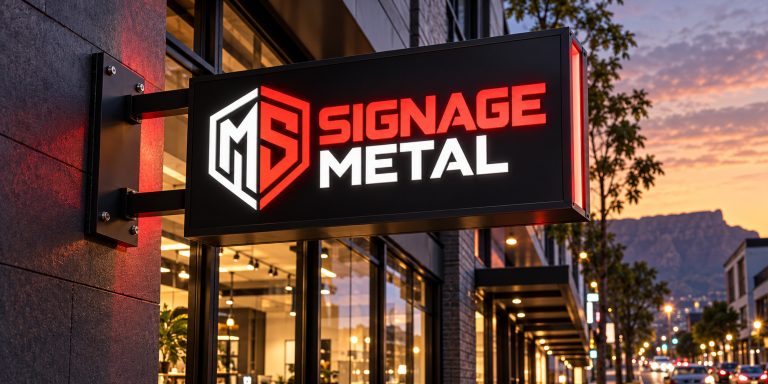 Illuminated Blade SignsA blade sign projects from the wall at right angles to the street, so it is seen by…View
- Shopfront SignsYour shopfront sign is the first thing a customer reads, often from across a street or down a…View
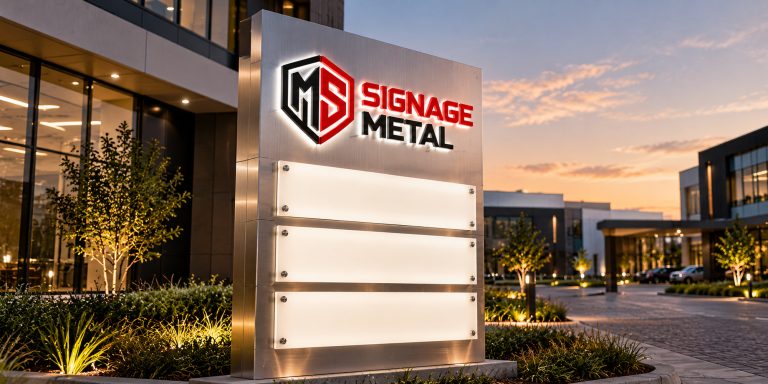 Totem SignsA totem sign is a slim, vertical, freestanding sign, usually between a boundary-wall sign and a full pylon…View
 Retail Fascia SignsA retail fascia sign is the main name board above your shop entrance. Most centres and landlords set…View
 LED Lightbox SignsAn LED lightbox is a fabricated cabinet with a translucent face lit evenly from behind by LED modules.…View
- Restaurant SignsA restaurant sign has two jobs: stop people on the street and then answer their questions at the…View
Send us a photo of your frontage and we will propose a projecting sign position and size.
Send your brief, quantities and deadline. We reply with a clear written quote and confirm the turnaround before anything goes to production.