Graphics Through Metal
Perforated Metal Signage for Facades, Screens and Entrances
Perforated metal signage uses patterns of holes to build images, logos or textures in a metal sheet. The panel carries your brand while still letting light, air and some views pass through.
It is a natural choice for facades, car park screens, balustrades and screening around plant, where a solid sign would block too much.
- Logos made from holes
- Light and air pass through
- Facade and screen friendly
- Steel, aluminium, stainless
Where perforated signage works best
- Building facades and cladding with integrated branding
- Parking structures and ventilated screens
- Plant and service screens that must breathe
- Balustrades, fences and boundary screens carrying a logo
- Reception and interior partitions
- Shopfront screens and awnings that need shade with identity
Perforation works best on large surfaces viewed from a distance, where the pattern merges into an image.
Design options
- Variable hole sizes: varying hole diameter creates tone, so a logo or image appears from a distance.
- Uniform patterns: a consistent perforation with one area solid to show a logo.
- Pattern shapes: round, square or slotted holes.
- Panel formats: flat sheets, folded trays, or curved panels.
- Layered screens: two perforated layers for depth, or a coloured layer behind.
- Combining with cut-outs: perforation plus cut lettering; see laser-cut metal signs
Materials and finishes
- Aluminium sheet is light and paintable, common for facades.
- Stainless steel: durable and clean.
- Mild steel: strong and economical when well coated.
- Corten: rust-toned weathering steel; see corten steel signs.
- Coatings: powder-coat or paint in brand colours, applied after perforation.
Lighting options
Perforated panels are excellent with light, as it can pass through the holes.
- Backlighting with LEDs behind the panel so the pattern glows at night
- Edge or uplighting that skims the surface
- Colour-changing options, subject to technical assessment and confirmed availability
- Daylight shadow patterns on interior floors and walls
For a uniform, lit surface, a lightbox is more even; perforated panels give a textured, dotted glow. Cable routing and access are planned at survey.
Perforation compared with alternatives
- Laser-cut panels use bold cut shapes; perforation builds an image from many small holes.
- Etched signs keep the surface whole and suit close reading.
- Architectural facade signage integrates signage into a facade; perforated metal is one common material for it.
- Lightboxes give an even glow; perforated panels let air and light through.
Technical considerations
- Open area: the percentage of holes affects strength, airflow and how visible the image is. We balance these.
- Wind loading: perforated panels let wind through, but framing must still be designed for loads, confirmed with the relevant professional where required.
- Viewing distance: as a rough guide, many designers allow around 25 mm of letter height per 10 m of viewing distance; image detail needs more distance to merge.
- Background: what sits behind the panel affects how the pattern reads.
- Flatness: large panels need adequate thickness and bracing to stay flat.
- Approvals: structural, electrical and municipal approvals are checked at survey and design stage and may involve landlord, body corporate or municipality.
What affects the price
- Sheet size, thickness and material
- Pattern complexity and hole count
- Folding, curving and framing
- Coating colour and finish
- Backlighting and cabling
- Installation height and access
Care and maintenance
Hose or wipe down regularly so dust does not clog holes. Check coating for chips and treat promptly. Inspect fixings and framing after storms. If lit, have drivers and LEDs checked; see LED signage repairs and cleaning and maintenance.
Perforated signage across Gauteng
Options & specifications
| Method | Punched or laser-cut hole patterns |
|---|---|
| Materials | Aluminium, steel, stainless, corten |
| Finish | Powder-coat, paint, natural or brushed |
| Formats | Flat, folded or curved panels |
| Open area | Chosen for strength, airflow and image clarity |
| Lighting | Backlit or washed (subject to assessment) |
| Best for | Facades, screens and entrances |
Options, materials and turnaround are confirmed on your written quote.
How ordering works
- 1
Brief
Share your logo or image, panel size and where it will be installed.
- 2
Site survey
We measure the area, check fixings, wind exposure, power and access.
- 3
Design and approval
You approve a scaled visual with hole pattern and framing.
- 4
Manufacture
Sheets are perforated, folded and coated.
- 5
Installation
Panels are fixed to a frame or wall and any lighting is connected.
Frequently asked questions
Can a logo be made from holes?
Yes. Varying hole sizes or placing solid and perforated areas lets a logo show clearly, especially from a distance.
Will perforated panels stop wind and rain?
No, they let both through. If you need weather protection, a solid backing is required.
Can they be lit?
Yes, LEDs behind the panel can make the pattern glow. Advanced lighting is subject to technical assessment and confirmed availability.
Which metal is best?
Aluminium suits light, painted facades; stainless or coated steel for strength; corten for a weathered look.
Do I need approval for a facade screen?
Likely. Structural, landlord, body corporate and municipal approvals may apply. We check at survey and design.
Request a quote for Perforated Metal Signage
Related services
 Laser-Cut Metal SignsLaser cutting lets us turn a logo or pattern into crisp metal with fine detail and tight, repeatable…View
 Etched Metal SignsEtching uses a controlled chemical process to eat a pattern or lettering into the surface of metal. The…View
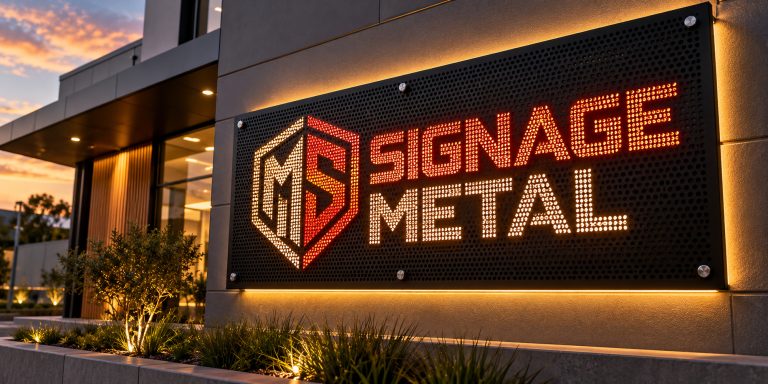 Architectural Facade SignageArchitectural facade signage is signage planned as part of the building design: integrated into cladding, recessed into walls,…View
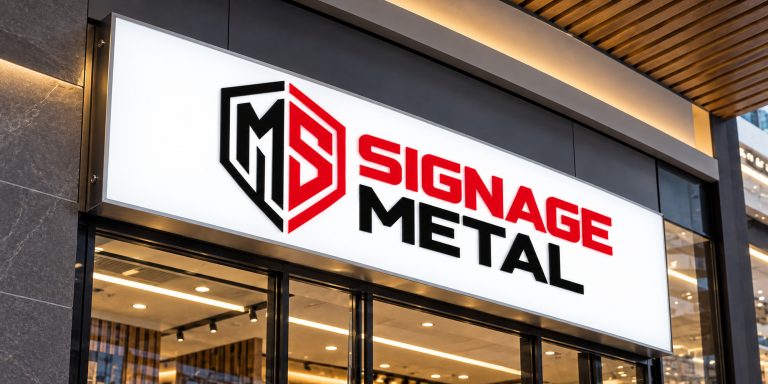 LED Lightbox SignsAn LED lightbox is a fabricated cabinet with a translucent face lit evenly from behind by LED modules.…View
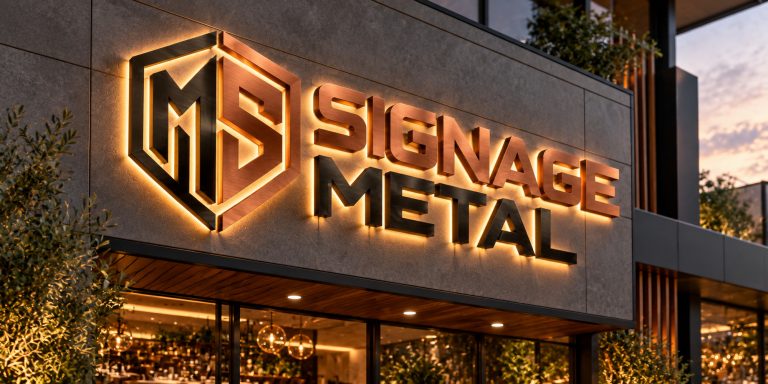 Corten Steel SignsCorten is a weathering steel that forms a stable rust-coloured surface, giving signs a rugged, earthy look that…View
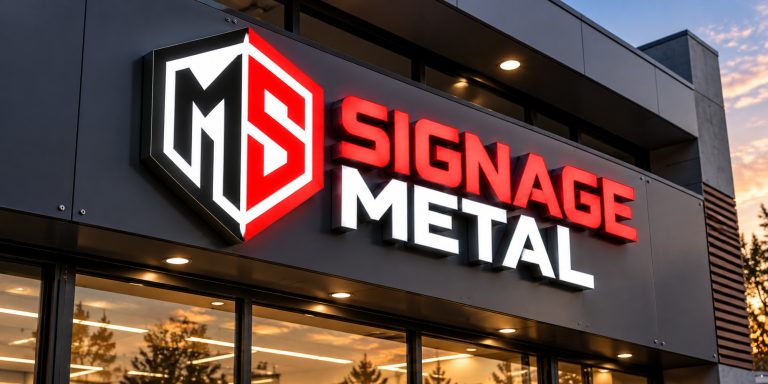 Large Building SignsLarge building signs are oversized letters, logos and panels fixed to the face of a building so the…View
Send your logo and the area you want to cover and we will propose a perforated panel.
Send your brief, quantities and deadline. We reply with a clear written quote and confirm the turnaround before anything goes to production.