Tower-top lettering
High-Rise Building Lettering Planned Around Access and Wind
High-rise building lettering is the name and logo fixed at the top or upper levels of a tower so that a whole business district can read it. It suits corporate headquarters, hotels, hospitals and multi-tenant towers where the top position carries a name.
Metal Signage designs and fabricates the lettering and plans the installation around rigging, access and wind, because getting those wrong is what makes tall signs expensive.
- Designed around access
- Wind-conscious fixing
- Rigging planned at survey
- Lit or unlit options
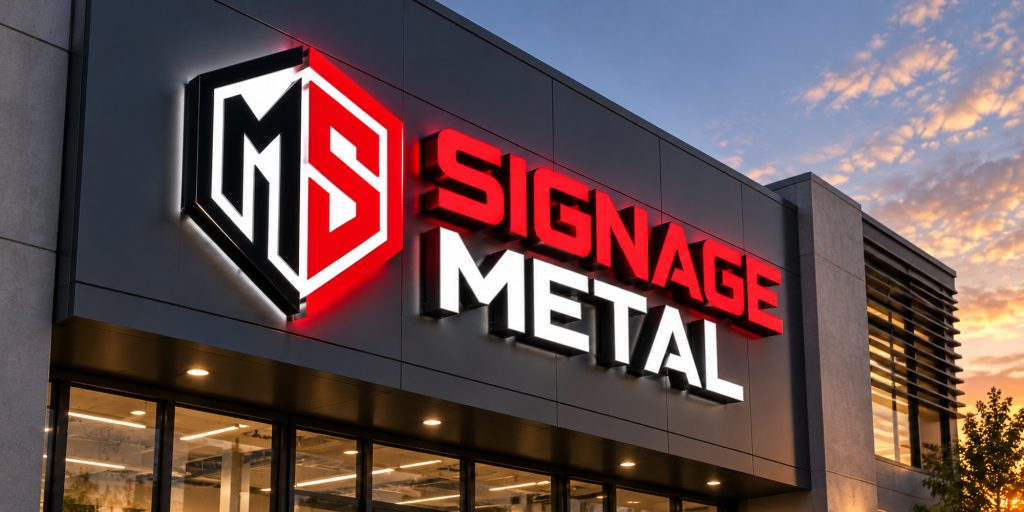
Where high-rise lettering works best
- Corporate head offices in towers where the name sits at the crown.
- Hotels and mixed-use buildings that need identification from across a node.
- Multi-tenant buildings where the anchor tenant or the building name takes the top position.
- Hospitals and campuses where tall buildings act as landmarks for arriving visitors.
- Buildings being rebranded, where old tower lettering must come down and new lettering go up.
For lower buildings, large building signs are usually the more direct answer. If the roof is the better position, see rooftop signs.
Design options
- Crown lettering: individual letters on the parapet or plant-room wall at the top of the tower.
- Upper-facade lettering: letters fixed several floors below the roofline on a clear section of facade.
- Sub-frame systems: letters pre-mounted on rails so installation is faster and safer at height.
- Modular installation: large signs built in sections that are lifted and joined, instead of one heavy piece.
Modular and pre-assembled approaches reduce time spent working at height, which usually lowers risk and cost.
Materials and finishes
At height, weight and durability decide the material.
- Aluminium letters for low weight and easy fabrication.
- Stainless steel where a premium finish is wanted and the structure allows the weight.
- Powder coat or industrial paint finishes matched to your brand.
- Acrylic faces for lit letters.
- Stainless fixings for long-term corrosion resistance.
Lighting options
Tower lettering is most visible at night, so lighting is often part of the brief. But every lit component at height is harder to service, so we favour robust, accessible designs.
- Front-lit letters give strong night readability. See front-lit channel letters.
- Halo-lit letters give a softer glow on the wall behind. See halo-lit letters.
- Unlit lettering removes servicing from the equation and relies on contrast.
Colour-changing and animated options are subject to technical assessment and confirmed availability. Glare and light spill towards neighbouring buildings are considered in design.
How it compares with related options
Choose high-rise lettering when the sign belongs at the top of a tall building and the main challenge is installation and wind. Choose rooftop signs when a frame standing on the roof suits the building better than fixing to the facade. Choose large building signs for low to mid-rise walls where scaffolding or a cherry-picker can reach. Choose architectural facade signage when the signage should be part of the building design from the start.
Technical considerations
- Wind loading: the higher the sign, the more wind it sees. Fixing type, spacing and letter design are checked, and structural input may be required.
- Rigging and access: options include rope access, suspended platforms, cradles or a building maintenance unit where one exists. We plan this at survey. See signage installation and rigging.
- Viewing distance: as a rough guide, many designers allow around 25 mm of letter height per 10 m of viewing distance. Tower lettering is often viewed from much further, so we confirm sizing on site.
- Mounting surface: glazing, cladding, concrete and parapets all need different fixings.
- Electrical access: power for lit letters must be routed safely to the top of the building.
- Approvals: structural, electrical and municipal matters are checked at survey and design and may need the landlord, body corporate or municipality.
What affects the price
- Height and the access method it demands.
- Letter size, depth and material.
- Lit or unlit, and lighting type.
- Building facade and fixing method.
- Cable routing to the roof or upper floors.
- Modular or single-piece construction.
- Engineering input and drawings.
- Removal of existing tower lettering, if any.
Care and maintenance
Lettering at height is difficult to reach, so inspections should be planned rather than reactive. Check fixings after severe weather, clean faces periodically and service lit components on a schedule. Combining inspections with the building maintenance programme is usually the most economical approach. See signage cleaning and maintenance.
Areas we serve
Towers are concentrated in the major business nodes, and we arrange surveys and installations by appointment across Gauteng from our Rivonia base.
Areas we regularly plan surveys and installations in include: Sandton, Johannesburg, Pretoria, Midrand, Centurion, Rosebank. See the full list on the areas page.
Options & specifications
| Position | Crown, parapet or upper facade |
|---|---|
| Letter material | Aluminium or stainless steel |
| Construction | Fabricated 3D, flat-cut or sub-frame modules |
| Lighting | Unlit, front-lit or halo-lit |
| Access | Rope access, cradle or platform as surveyed |
| Fixing | Chemical or mechanical anchors, per survey |
Options, materials and turnaround are confirmed on your written quote.
How ordering works
- 1
Brief
Tell us the tower, the logo and whether the sign needs to light up.
- 2
Site survey
We check the facade, parapet, power route, and how the sign will be reached and rigged.
- 3
Design and approval
You approve scaled drawings and a mockup, and we flag structural or approval input.
- 4
Manufacture
Letters are fabricated, finished and often pre-assembled in modules.
- 5
Installation
Rigging and installation are carried out by appointment with the agreed access method.
Frequently asked questions
How do you install lettering on a tower?
The method is chosen at survey: rope access, suspended cradles or a platform, depending on the building. Modular pre-assembled lettering reduces the time spent at height.
Does wind affect tower signs?
Yes, more than at ground level. Fixing design, letter depth and spacing are checked, and structural input may be recommended.
Can you replace old tower lettering?
Yes. We can remove existing letters, make good the facade and install new lettering. See signage removal and replacement.
Do I need permission?
Usually. The landlord, body corporate or municipality may need to approve. We check what applies during survey and design but do not promise approval.
Should tower lettering be lit?
If the building is mainly seen at night, lighting helps. But lit components at height are harder to service, so unlit lettering is a reasonable lower-maintenance choice.
Request a quote for High-Rise Building Lettering
Related services
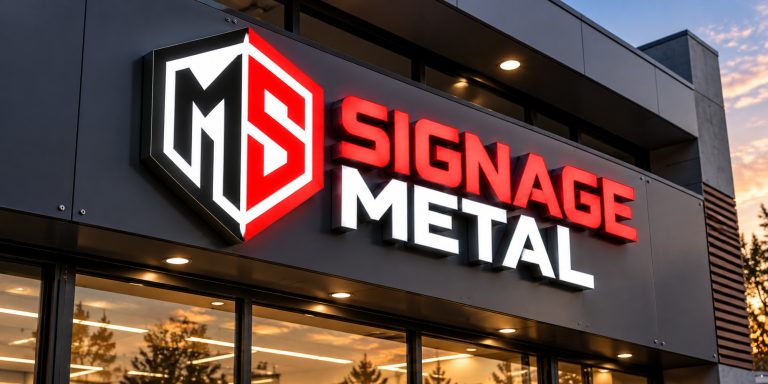 Large Building SignsLarge building signs are oversized letters, logos and panels fixed to the face of a building so the…View
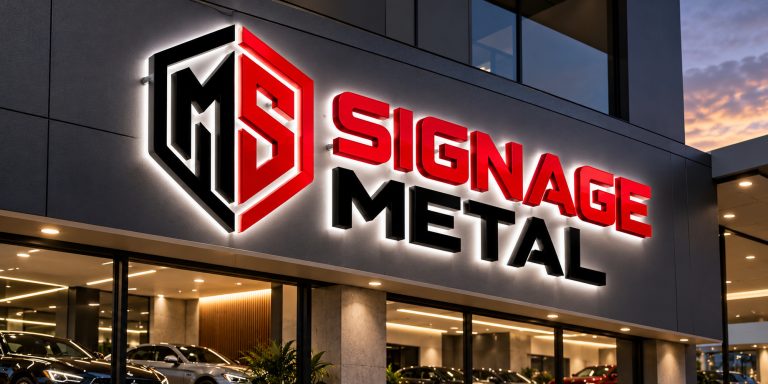 Rooftop SignsA rooftop sign is a sign or sign structure mounted on top of a building so it is…View
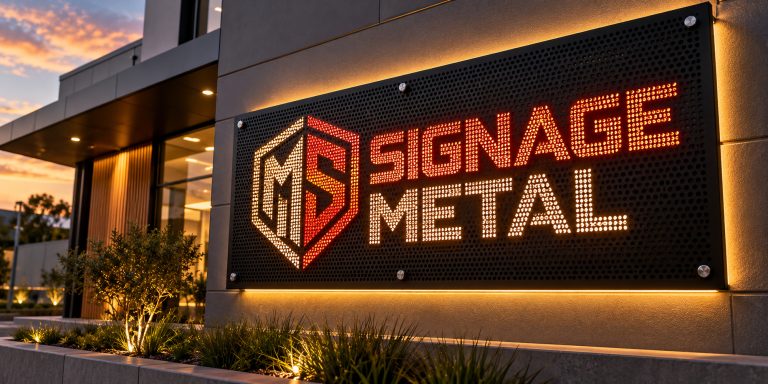 Architectural Facade SignageArchitectural facade signage is signage planned as part of the building design: integrated into cladding, recessed into walls,…View
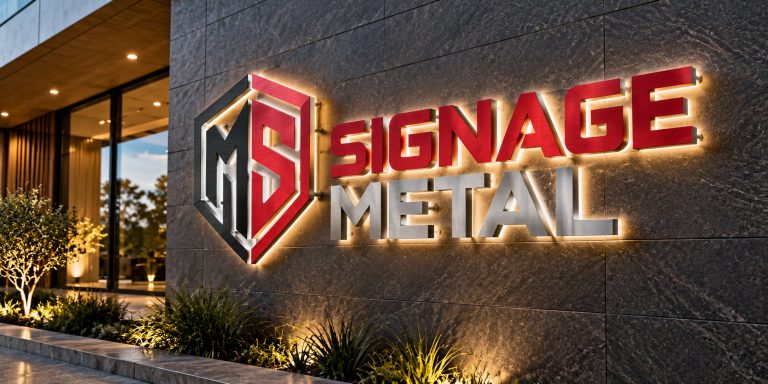 Halo-Lit and Backlit LettersHalo-lit letters have solid metal faces and LED lighting at the back. The light washes onto the wall…View
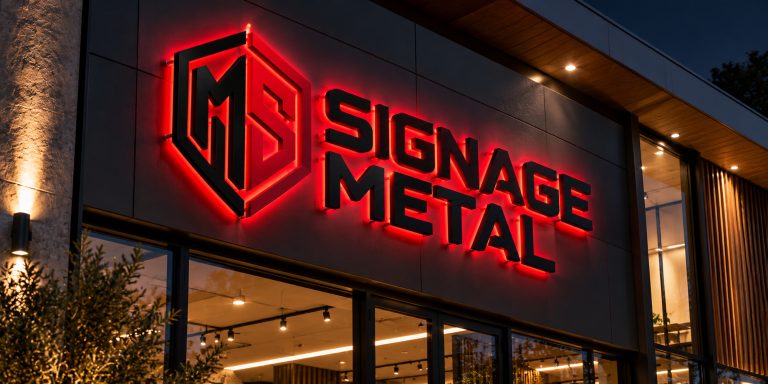 Signage Installation and RiggingFitting a sign is a technical job. Metal Signage installs illuminated and non-illuminated signs on facades, fascias, pylons,…View
- Signage Removal and ReplacementWhen a business moves, rebrands or outgrows an old sign, the old one has to come down and…View
Book a survey so we can plan access, rigging and fixing before you commit to a design.
Send your brief, quantities and deadline. We reply with a clear written quote and confirm the turnaround before anything goes to production.