Factory signage
Factory Exterior Signs for Plants and Production Sites
Factory exterior signs identify your plant from the road, the gate and the yard. We design, manufacture and install building lettering, gate and boundary signs, and entrance identification built for dust, sun and daily heavy-vehicle traffic.
They suit manufacturers, processing plants and production sites that need visitors, drivers and inspectors to find the right entrance first time.
- Built for harsh sites
- Gate to building coverage
- Metal, not flimsy panels
- Surveyed before quoting
Where factory exterior signs work best
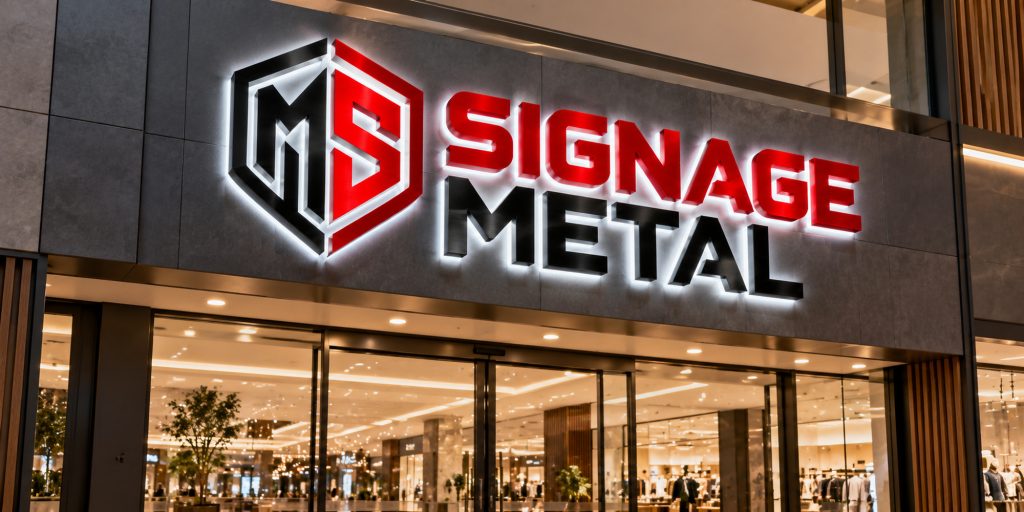
A factory usually has several sign positions, and each does a different job. The street-facing gate or boundary wall tells drivers they have arrived. The main building elevation carries the company name for visitors. Secondary entrances, goods-in gates and dispatch doors need their own identification so deliveries do not queue at the wrong place.
Typical applications include:
- Company name and logo lettering on the front elevation of a production building
- Gate pillar and boundary wall signs at the site entrance
- Freestanding entrance signs beside the access road
- Visitor reception and main office entrance identification
- Separate goods-in, dispatch and staff entrance signs
- Site name and unit numbers for multi-tenant industrial parks
For a multi-building plant, a consistent family of signs makes the site feel organised and helps with wayfinding later. See Factory and Warehouse Wayfinding for the on-site directional layer.
Design options
Most factory exterior signs fall into a few construction types, and many sites combine two or three of them.
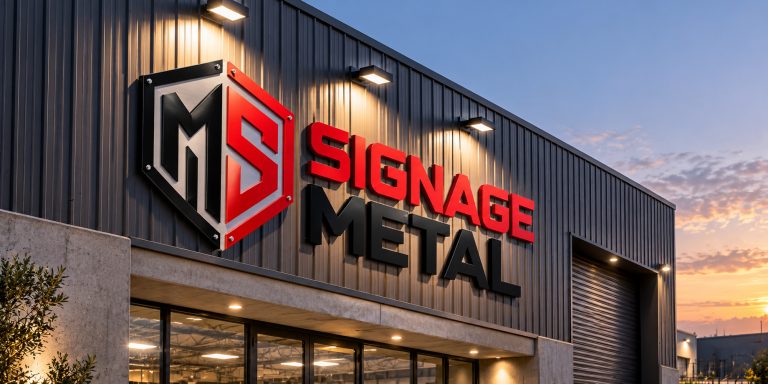
- Fabricated letters on the facade: 3D metal letters fixed to brick, face-brick, concrete panel or cladding, usually stand-off mounted so water runs behind them rather than pooling.
- Flat-cut letters and logos: cut from sheet for a clean, lower-profile look. See Flat-Cut Metal Letters.
- Panel signs: a folded aluminium or steel tray with a printed or cut-vinyl face, suited to gate pillars and boundary walls.
- Freestanding structures: a steel-framed totem or pylon at the entrance, with or without lighting.
- Gate-mounted signs: panels bolted to palisade or sliding gates, designed around the gate frame and its movement.
Fixing is chosen for the substrate. Brick and concrete take anchor bolts, while profiled sheeting and insulated panels need through-fixing or a subframe so that the cladding is not overloaded.
Materials and finishes
Industrial sites are tough on signs, so material choice matters more than it does on an office block.
- Aluminium: light, workable and well suited to large letters and trays. Powder coating gives a durable colour finish.
- Stainless steel: a good choice near wash-down areas, chemical processes or coastal-style corrosive air. Brushed and satin finishes hide fingerprints and dust better than polished.
- Mild steel, painted or galvanised: strong and economical for heavy structures, provided the coating system is specified properly.
- Weather-grade vinyl and reflective film: for panel faces, with reflective options where gates are used at night.
Our materials and finishes page shows how finishes compare. On the day of the survey we look at what is already on your site so that new signs match existing gates, paint and corporate colours.
Lighting options
Many factory signs run unlit, because security lighting and floodlights already cover the entrance. Where the company name needs to read after dark, there are three practical routes.
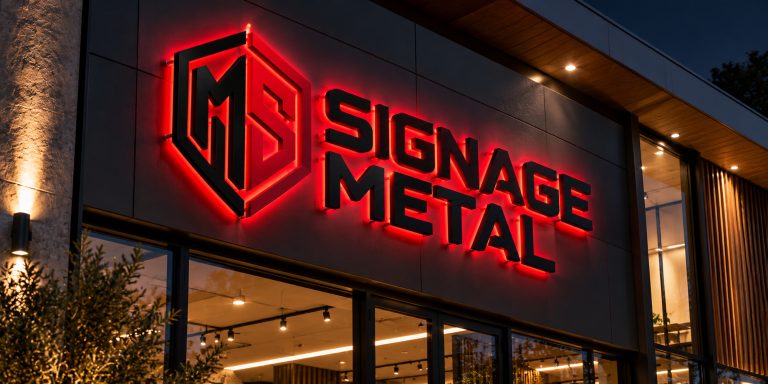
- Halo-lit or front-lit lettering on the main elevation, so the name stays visible from the road at night.
- Lit entrance totems with internal LED, useful where the access road is dark.
- External floodlighting or reflective faces for gate and boundary signs, where internal lighting is not needed.
Lighting needs a power point or supply close to the sign, and in a plant that can mean running cable across a yard or through a wall. We check electrical access during the survey and flag where an electrician or the site engineer needs to be involved. See Halo-Lit and Backlit Letters and Front-Lit Channel Letters for the lit lettering options.
How factory exterior signs compare with related options
Choose factory exterior signs when the job is identifying the plant itself: the building front, the gate and the entrance. Choose neighbouring services when the need is different.
- Warehouse Identification Signs are for inside and around the storage areas: bays, doors and zones.
- Industrial Safety Signs carry mandatory and warning messages and follow safety signage conventions rather than branding.
- Large Building Signs suit tall or wide elevations where scale and access equipment drive the project.
- Non-Illuminated Pylon Signs suit a simple, robust entrance structure.
Many plants need all of these. We plan them together so that the entrance, building and site signs look like one system.
Technical considerations
Viewing distance and size. As a rough guide, many designers allow around 25 mm of letter height per 10 m of viewing distance, and more where traffic is moving. We confirm sizes on site, because a gate set back behind a long approach road reads very differently from a building on the street edge.
Mounting surface. Face-brick, plastered brick, concrete panels, profiled sheeting and sandwich panels each need a different fixing method. We check the substrate during the survey.
Electrical access. Lit signs need a supply, an isolator and sensible cable routes. This is checked at survey stage.
Vehicle impact and dust. Signs near turning circles and loading zones are positioned and fixed with knocks in mind. Dust build-up and drainage are considered in the design.
Access and approvals. Large elevations may need a lift or scaffolding. Structural, electrical and municipal outdoor-advertising matters are checked at the survey and design stage, and may involve the landlord, park management, body corporate or the municipality. Approval is not something we can promise in advance.
What affects the price
- Number of signs and how many positions on site
- Size and depth of letters or panels
- Material, thickness and finish
- Whether any sign is lit, and how far the power supply is
- Wall or structure type and the fixing method needed
- Access equipment such as a cherry picker or scaffolding
- Foundations and civil work for freestanding signs
- Artwork readiness and number of design revisions
- Distance and number of site visits in Gauteng
We quote after a survey, or from photographs and dimensions for straightforward jobs. Use Request a Quote to start.
Care and maintenance
Industrial air carries dust, grease and sometimes chemical residue, so a regular wash keeps factory signs readable. Use clean water and a soft brush or cloth with mild detergent, avoid abrasive pads on brushed and powder-coated finishes, and keep pressure washers at a distance from vinyl edges.
Check fixings and lighting at the same time. If a sign is damaged by a vehicle or fades, see Signage Cleaning and Maintenance or Signage Removal and Replacement.
Factory signage across Gauteng
Factories and plants sit across the Gauteng industrial belt. Site surveys and installations are arranged by appointment from our base in Rivonia, Sandton. Areas we regularly arrange work in include:
Options & specifications
| Letter and logo types | Fabricated 3D, flat-cut, or panel-mounted |
|---|---|
| Face materials | Aluminium, stainless steel, painted steel, vinyl |
| Typical fixing | Stand-off studs, anchor bolts, subframe |
| Lighting | Unlit, halo-lit, front-lit or lit totem |
| Gate signs | Panel signs fitted to palisade, sliding or swing gates |
| Entrance structures | Steel-framed totems and pylons |
| Survey | By appointment across Gauteng |
Options, materials and turnaround are confirmed on your written quote.
How ordering works
- 1
Brief
Tell us which entrances, gates and elevations need signs and who must find them.
- 2
Site survey
We measure walls and gates, check the substrate and note power and access for equipment.
- 3
Design and approval
You receive visuals and sizes. Structural, electrical and municipal checks are done at this stage.
- 4
Manufacture
Letters, trays and structures are fabricated and finished at our workshop.
- 5
Installation
Signs are fixed and, where lit, connected, with site safety rules followed.
Frequently asked questions
Can you sign a large factory elevation?
Yes. Large elevations are measured at survey, and we plan access equipment and fixings for the cladding or masonry. Scale and height can influence how the work is scheduled.
Do factory signs need to be lit?
Not always. Many sites rely on security lighting. Lighting is worth considering where the name must read from the road at night. We advise after seeing the site.
Will the sign survive dust and heavy vehicles?
We choose metals and coatings suited to industrial conditions and position signs away from turning and loading areas where possible. No sign is immune to impact, so placement matters.
Do I need permission before putting up a sign?
It depends on the property and the municipality. Landlord, park management or body corporate consent may be needed, and outdoor signage may require municipal approval. We check this during survey and design.
Can you match our existing gate and corporate colours?
Yes. Send brand colours or artwork, and we match finishes as closely as the material allows. See our artwork guidelines.
Request a quote for Factory Exterior Signs
Related services
 Warehouse Identification SignsWarehouse identification signs tell people and drivers where things are: dock doors, bays, aisles, racking, zones and departments.…View
 Industrial Safety SignsIndustrial safety signs communicate what workers and visitors must do, must not do, and where to go in…View
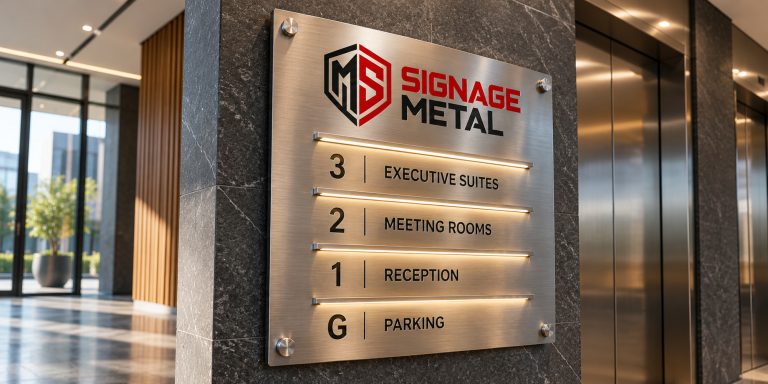 Factory and Warehouse WayfindingFactory and warehouse wayfinding guides trucks, forklifts, visitors and staff around an industrial site. It combines directional signs,…View
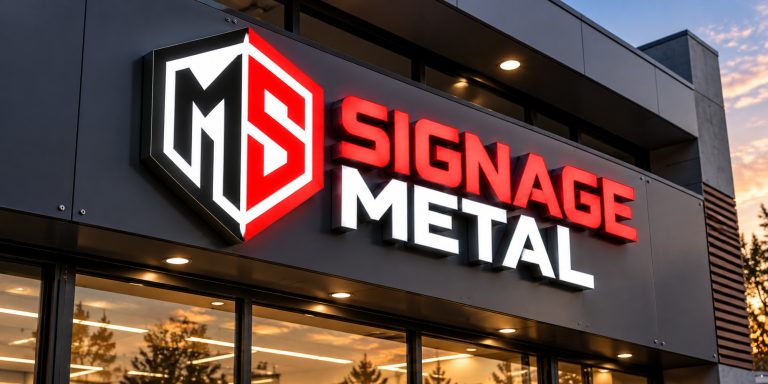 Large Building SignsLarge building signs are oversized letters, logos and panels fixed to the face of a building so the…View
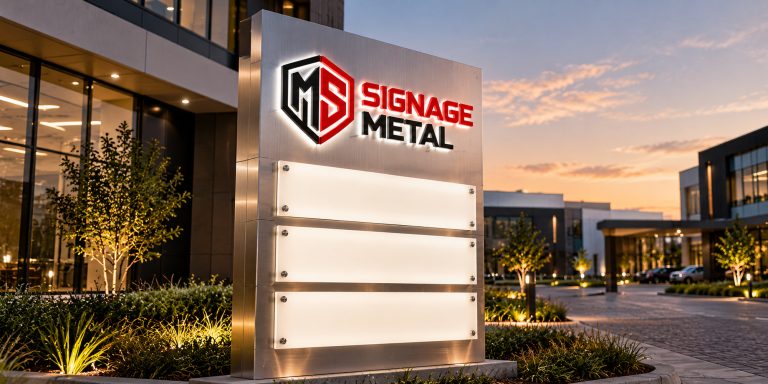 Non-Illuminated Pylon SignsA non-illuminated pylon is a tall, freestanding sign with no internal lighting. The brand is carried by applied…View
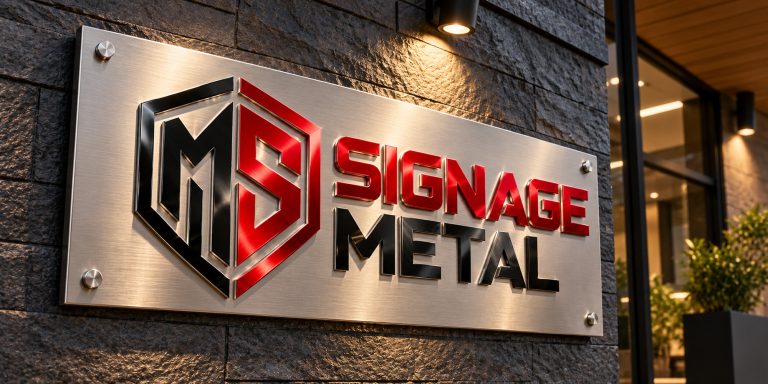 Flat-Cut Metal LettersFlat-cut metal letters are the simplest route to a clean, dimensional sign: each letter is cut from a…View
Book a site survey for your factory and get a clear plan for every entrance and elevation.
Send your brief, quantities and deadline. We reply with a clear written quote and confirm the turnaround before anything goes to production.