Precision CNC Cutting
Laser-Cut Metal Signs, Logos and Decorative Screens
Laser cutting lets us turn a logo or pattern into crisp metal with fine detail and tight, repeatable edges. It is the technique behind pierced entrance signs, decorative screens, stencil-style lettering and intricate brand shapes.
We cut in a range of metals, then finish, fabricate and install to suit your site. Material and thickness are selected at design stage.
- Fine detail, clean edges
- Steel, stainless, aluminium
- Signs, screens and logos
- Repeatable for rollouts
Where laser-cut signs work best
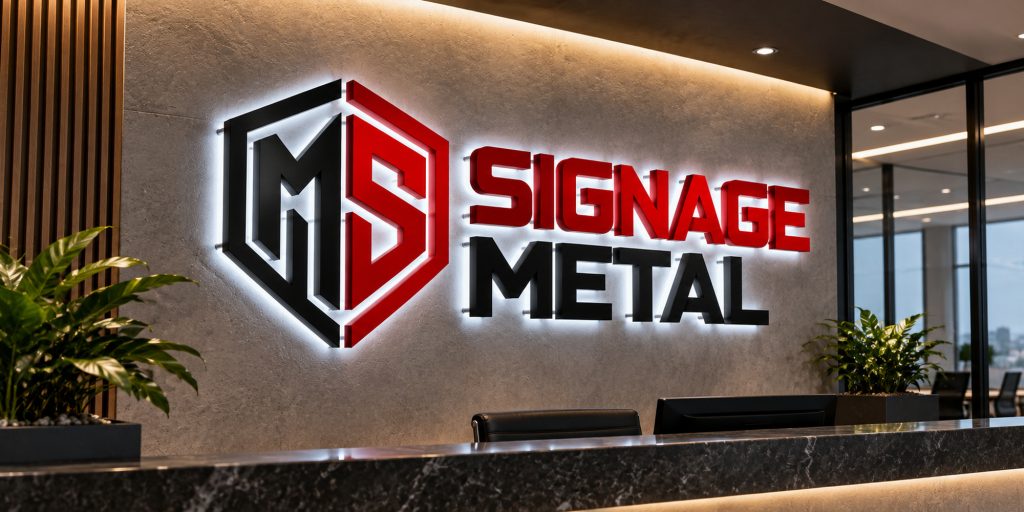
- Entrance signs and gate panels with pierced lettering
- Decorative screens and boundary panels carrying a logo or pattern
- Reception and feature walls with cut-out shapes
- Restaurants and retail interiors with stylised brand marks
- Property numbers and name plates with intricate typefaces
- Multi-site rollouts needing identical signs made repeatedly; see multi-branch retail branding
If your design has fine lines, complex curves or repeated motifs, laser cutting is usually the most practical way to produce it in metal.
Design options
- Stencil-style cut-outs: text cut through the plate, with bridges where letters need support.
- Positive cut letters: the letters are the cut pieces, then fixed to a wall; see flat-cut metal letters.
- Layered panels: two or more cut layers with a gap to create shadow depth.
- Backlit panels: a cut plate in front of a lit backing so light shows through the pattern.
- Folded signs: cut and bent into trays or boxes for monuments and totems.
Materials and finishes
- Mild steel: strong and economical; must be protected by paint or powder-coat for outdoor use.
- Stainless steel: clean and corrosion resistant, in brushed or polished finish; see stainless steel letters.
- Aluminium: light and easy to paint; see aluminium letters.
- Corten: weathering steel for a rust-toned finish; see corten steel signs.
- Brass and copper: available for decorative work, subject to thickness and cutting suitability.
Edges are cleaned after cutting, and finishes are applied once any folding or welding is complete.
Lighting options
A laser-cut panel is a natural partner for light, because the openings let it through.
- Backlit panels with LEDs behind the cut-out, giving a glow through the pattern
- Edge or wall washing from the side for a shadow effect
- External spotlights on freestanding screens
- Unlit use in daylight where shadow play is enough
Because cutting is complex, the backing and lighting depth are designed together. Colour-changing options are subject to technical assessment and confirmed availability. For a fully lit finish, see LED lightbox signs.
Laser cutting compared with other methods
- Etching is better for very fine surface detail and paint-filled text on a solid plate; laser cutting is better when you want holes, shadows and light to pass through.
- Perforated panels use repeating holes that form images; laser cutting handles bespoke shapes and text.
- Flat-cut letters are the same cutting method used to make separate letters for a wall; choose a pierced panel when you want one unified piece.
- Fabricated 3D letters give real depth when the sign must read from a distance or be lit from inside.
Technical considerations
- Bridges and islands: letters like O, A and B need support points in stencil-style designs. We adjust the typeface or add bridges.
- Thickness and span: thin plate bends under wind; thickness and bracing depend on panel size.
- Corrosion: mild steel needs a good coating system for outdoor use; stainless and aluminium are naturally more resistant.
- Viewing distance: as a rough guide, many designers allow around 25 mm of letter height per 10 m of viewing distance; thin strokes should be sized with that in mind.
- Safety: edges are deburred, and public-facing panels are detailed to reduce risk.
- Approvals: structural, electrical and municipal approval are checked during survey and design and may involve landlord or body corporate.
What affects the price
- Material type and thickness
- Size of the panel and nesting on standard sheets
- Cutting complexity and number of pierce points
- Folding, welding and finishing
- Quantity, since repeat runs are more efficient
- Lighting, installation access and foundations
Care and maintenance
Wipe panels clean and keep openings free of dirt and insects. For painted steel, touch up chips quickly to prevent rust. Stainless and aluminium need only mild washing. If a panel is lit, check the LEDs and drivers occasionally; our LED signage repair service can help with faults.
Laser-cut signs across Gauteng
Options & specifications
| Process | CNC laser cutting from supplied artwork |
|---|---|
| Metals | Mild steel, stainless, aluminium, corten; others on request |
| Finishes | Powder-coat, paint, brushed, polished or natural |
| Forms | Pierced panels, cut letters, screens, trays |
| Lighting | Backlit through cut-outs (subject to assessment) |
| Artwork needed | Vector files; we can redraw if needed |
| Edges | Cleaned and deburred |
Options, materials and turnaround are confirmed on your written quote.
How ordering works
- 1
Brief
Send your logo or pattern as a vector file and tell us where the panel will go.
- 2
Site survey
We measure the opening or wall, and check fixings, power and exposure.
- 3
Design and approval
We prepare cutting layouts and a visual, adjusting bridges and thickness.
- 4
Manufacture
Metal is laser-cut, folded or welded, and finished.
- 5
Installation
Panels are fixed with brackets, posts or concealed fittings and made good.
Frequently asked questions
What files do you need for laser cutting?
Vector artwork such as AI, EPS, PDF or DXF is best. If you only have a low-resolution logo, we can redraw it; see our artwork guidelines.
How fine can the detail be?
It depends on material and thickness. As a rule, features should be no thinner than the plate thickness. We check detail at design stage.
Can letters like O and A be cut out?
In stencil-style cut-outs they need bridges. We adapt the typeface or cut positive letters instead.
Can a laser-cut panel be lit?
Yes, usually with LEDs behind it. Advanced or colour-changing lighting is subject to technical assessment and confirmed availability.
Which metal should I choose?
Stainless for minimal upkeep, aluminium for light weight and colour, corten for a weathered look and coated steel for strength at value. We recommend after the survey.
Request a quote for Laser-Cut Metal Signs
Related services
 Etched Metal SignsEtching uses a controlled chemical process to eat a pattern or lettering into the surface of metal. The…View
 Perforated Metal SignagePerforated metal signage uses patterns of holes to build images, logos or textures in a metal sheet. The…View
 Flat-Cut Metal LettersFlat-cut metal letters are the simplest route to a clean, dimensional sign: each letter is cut from a…View
 Corten Steel SignsCorten is a weathering steel that forms a stable rust-coloured surface, giving signs a rugged, earthy look that…View
 LED Lightbox SignsAn LED lightbox is a fabricated cabinet with a translucent face lit evenly from behind by LED modules.…View
 Non-Illuminated Monument SignsA monument sign is a low, solid, ground-standing sign, usually wider than it is tall, set at an…View
Send your artwork and we will advise on metal, thickness and cutting detail.
Send your brief, quantities and deadline. We reply with a clear written quote and confirm the turnaround before anything goes to production.